
 Quick answer:
Rocket Yoga is a dynamic Ashtanga-based yoga practice created by Larry Schultz in the 1980s. It reorganises poses from traditional Ashtanga into three core sequences — Rocket 1, Rocket 2 and Rocket 3 — while allowing more freedom to modify poses, explore inversions and arm balances, and adapt the practice to the individual.
Rocket keeps Ashtanga’s breath-led structure and sequencing, but removes some of its rigidity. Students can explore challenging postures earlier, use modifications and practise at a faster, more playful pace.
The name ‘Rocket’ came from Grateful Dead guitarist Bob Weir, who said ‘it gets you there faster.’ Rocket Yoga consists of three sequences (Rocket 1, 2, and 3) that emphasize inversions, arm balances, and creative transitions. Today, Rocket Yoga teacher training programs are offered worldwide for those wanting to teach this energetic style.
Rocket Yoga quick facts| Questions | Answers |
|---|---|
| What is Rocket Yoga? | A modified, accessible version of Ashtanga Vinyasa Yoga |
| Who created Rocket Yoga? | Larry Schultz (1980s, San Francisco) |
| Main sequences | Rocket 1, Rocket 2, Rocket 3 |
| Key focus areas | Inversions, arm balances, creative flow |
| Best for | All levels (modifications available) |
| Typical class duration | 60-90 minutes |
Rocket Yoga is designed to increase flexibility, strength and balance in the body, while also promoting a sense of calm and focus in the mind. It is an intense practice that is suitable for both beginners and experienced yogis, as the series of poses in Rocket Yoga can be modified to suit different levels of fitness and abilities.
What Is Rocket Yoga? History & Origin
Rocket Yoga is a dynamic, Ashtanga-based yoga practice created by Larry Schultz. It keeps the breath-led structure and sequencing of Ashtanga Vinyasa while giving practitioners more freedom to modify poses, explore inversions and arm balances, and adapt the practice to the individual. The system is organised around three main sequences: Rocket 1, Rocket 2 and Rocket 3.
In the mid-1990s, Larry traveled on tour with the Grateful Dead as the band’s personal yoga teacher. Larry personally told us that the idea for Rocket developed while he was spending long stretches in hotels on tour. Bored in his hotel room and practising on his own, he began reshaping the Ashtanga sequences into a more creative, playful and accessible practice.
Why Is It Called “Rocket Yoga”?
The name “Rocket” came from Grateful Dead guitarist Bob Weir. After practising with Larry, Weir suggested calling the sequence “The Rocket” because “it gets you there faster.” The name stuck. Larry used to joke that he never knew exactly where “there” was, but the Rocket would get you there faster anyway.
Who Created Rocket Yoga? Larry Schultz’s Story
Rocket Yoga was created by Larry Schultz, a longtime student of Pattabhi Jois and the Ashtanga Vinyasa method. Larry began practising yoga in the 1970s and spent years studying Ashtanga before developing the more flexible approach that became Rocket Yoga.
During the 1980s and 1990s, Larry experimented with the traditional Ashtanga series by reorganising poses, introducing modifications and giving students more freedom to explore postures that would normally appear later in the Ashtanga system. That approach became the foundation of the Rocket sequences taught around the world today.

All Yoga Training’s connection to Larry is personal. In 2009, Larry ran our first yoga teacher training in Thailand under his school name, It’s Yoga. After Larry passed away, the Thailand training school later continued under the All Yoga Training name. Rocket Yoga and Larry’s teaching has remained an important part of our practice and teacher training ever since.
Today, Rocket Yoga is practiced and taught around the world. Students can explore the method in classes and workshops, while teachers can deepen their understanding of the sequences through advanced training such as our Rocket Yoga teacher training module.
“Larry Schultz was considered the ‘Bad Man of Ashtanga Yoga’. While practising with Guruji, Larry liked to sneak in more advanced poses, such as handstands, for fun. Pattabhi Jois would catch him and affectionately call out: ‘You bad man — you bad man!’”
Rocket Yoga Key features
Playful and fun
Faster tempo
Accessible for all levels
Focus on inversions and arm balances
3 sequences based on Ashtanga Vinyasa Yoga
More playful with a faster tempo
While the traditional method of Ashtanga Yoga focuses on long and slow ujjayi breath, Rocket is a bit more upbeat. While we keep the Ujjaji Pranayama breathing and five breaths per pose, the count is a bit faster. It makes the practice more fun while keeping the meditative aspect of the breath. Rocket becomes like a dance or a moving meditation.
Rocket Yoga Inversions
One of the main features of Rocket Yoga is its emphasis on inversions, such as headstands, handstands, and elbow stands. These fun and challenging poses have many benefits for the body, including increased blood flow to the brain, improved circulation, and a boost to the immune system.
Arms Balances
Another unique aspect of Rocket is the use of “flying” poses. These are a series of arm balances and transitions designed to build strength, flexibility, and coordination in the upper body. These flying poses are a lot of fun and can be a great way to build confidence and self-esteem.
Accessible for all levels
Arm balances and inversions can be challenging, but they don’t have to be out of reach for those who have never practiced. This is the beauty of the Rocket sequence. With proper guidance and modifications, arm balances are accessible to everyone. With patience and consistency, anyone can develop the skills to practice safely and effectively.
Music
One other important element of Rocket is music. Music is a powerful tool in a yoga practice to create a specific atmosphere. It helps to create a fun and dynamic vibe to stay energized and focused. Generally, the playlist will be more upbeat and energetic than a regular yoga class, mixing different genres such as rock, hip-hop, electronic, and world music. The music keeps the energy high and supports students to maintain a steady pace throughout the practice.
“In my experience of the empowering flow of Rocket Yoga, I find myself transcending limitations, embracing vulnerability, and harnessing inner strength. As I synchronize my breath with each challenging movement, I am reminded that the journey is as much about the exploration within as it is about the physical asanas. This style of yoga gifts me a renewed sense of freedom and possibility. It’s the perfect complement of my Yin practice.”

The 3 Rocket Yoga Sequences Explained
Warm-up sequence
Same as the traditional Ashtanga Vinyasa Yoga method, the Rocket practice begins with the Sun Salutations sequences, to help prepare the body for the more intense poses that are to come. Usually, we will do 3 rounds of Sun Salutation A followed by 3 rounds of Sun Salutation B. It’s recommended to simply walk back for the Sun Salutaion A rounds and start to jump back from Sun Salutation B.
Rocket Yoga Launching sequence
Right after the last Sun Salutation B, student will get the first taste of Rocket with the launching sequence. This little vinyasa flow sets the pace and vibe for the rest of the rocket practice. It starts with Chair pose, followed by Half chair pose and from there the first arm balance: Bakasana or Crow pose. From there, we jump back to chaturanga for a vinyasa and then initiate the standing sequence of the Rocket sequence.
Rocket Yoga Standing Poses
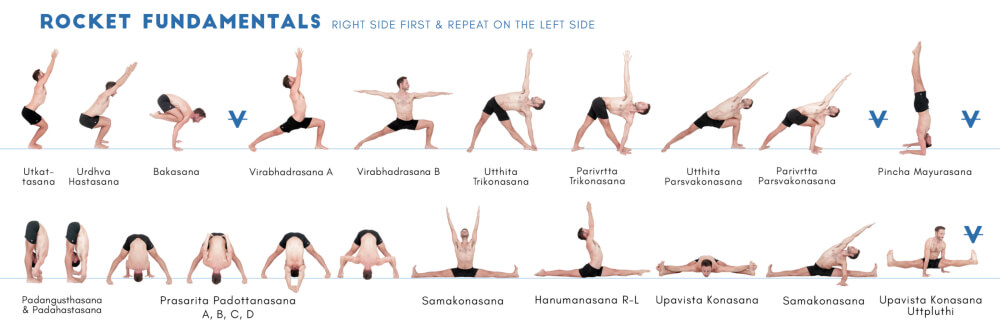
The practice then moves on to a launching sequence linked to a series of standing poses, such as the Warrior poses and the Triangle poses. These helps to build strength and balance in the legs and core.
Rocket Yoga 1 Sequence
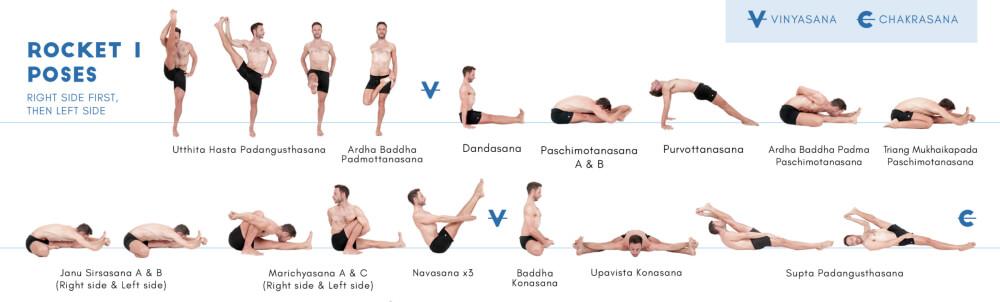
Rocket 1 is based on the Ashtanga Primary Series. A big focus is on forward folds, which lengthen and strengthen the hamstrings.
-
1
Dandasana – Staff pose
-
2
Paschimottanassana A and B – Forward folds
-
3
Purvottanasana – Upward plank pose
-
4
Ardha Baddha Padma Paschimottanasana – Half-bound lotus pose
-
5
Trianga Mukhaikapada Paschimottanasana – Three-Limbed Forward Bend
-
6
Janu Sirsasana A and B – Head-to-Knee Forward Bend
-
7
Marichyasana A and C – Sitting twist
-
8
Baddha Konasana – Butterfly pose
-
9
Upavista Konasana A an B – Wide-legged forward fold
-
10
Supta Konasana – Reclined angle pose
-
11
Supta Padangustasana A and B – Reclined Big Toe Pose
-
12
Ubhaya Padangustasana – Seated balancing pose
-
13
Setu Bandhasana – Bridge pose
-
14
Urdhva Dhanurasana – Wheel pose
-
15
Paschimottanasana – Forward fold
-
16
Eka Pada Raja Kapotasana – Pigeon pose
-
17
Gomukasana – Cow pose
Rocket Yoga 2 Sequence
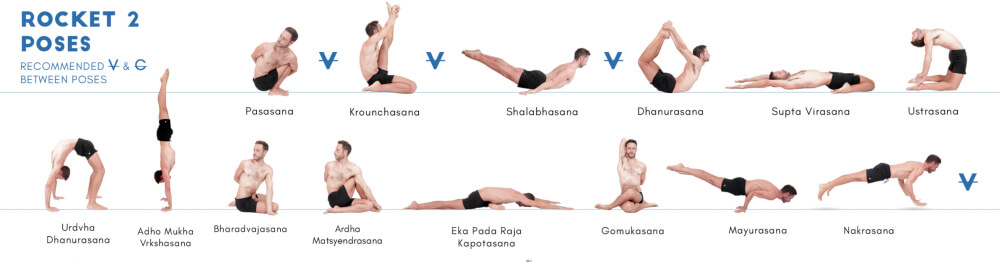
Rocket 2 is based on the Intermediate Series with a focus on spinal extensions to stimulate the nervous system. Larry Schultz like to joke about Rocket yoga 2 sequence by saying: “90 min classes, 90 poses! That’s the Rocket!”
-
1
Pasasana
-
2
Krounchasana
-
3
Salabhasana
-
4
Dhanurasana
-
5
Supta Virasana
-
6
Ustrasana
-
7
Balasana
-
8
Kapotasana A and B
-
9
Urdhva Dhanurasana
-
10
Handstand
-
11
Straddle Handstand
-
12
Pincha Mayurasana
-
13
Bharadvajasana
-
14
Ardha Matsyendrasana
-
15
Mayurasana
-
16
Nakrasana
Rocket Yoga 3 Sequence
Rocket 3 is a combination of Rocket 1 and 2. Rocket 3 doesn’t imply that it is more advanced, it simply contains asanas from Rocket 1 and 2, and as per the Rocket philosophy, it should always remain accessible.
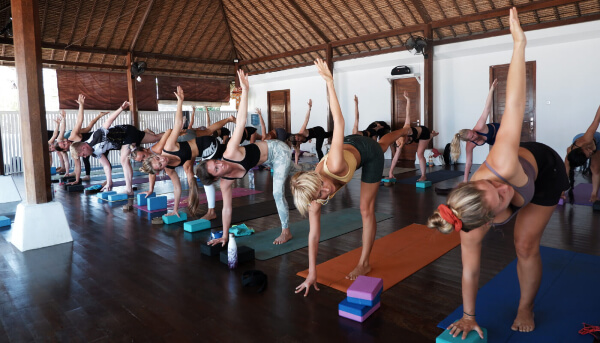
Back in the days in San Francisco where Larry Schultz’s studio was located, he would teach Rocket 3 every Friday. Students and Rocket yoga lovers used to call that day the BBQ day! They knew that they were going to be roasted by the challenging and fun Rocket class.
Finishing poses
The practice concludes with a series of inversions and relaxation poses, such as headstands, shoulder stands, yoga mudra, padmasana and savasana. This helps to release tension from the body and calm the mind.
Unlike the strict sequence of Ashtanga Vinyasa Yoga where each pose is practiced following a rigid order, Rocket Yoga is more fluid and playful. A Rocket teacher can add his own flavor to the sequence by adding more poses and variations. Each class will have a different vibe, keeping the practice fresh and interesting.
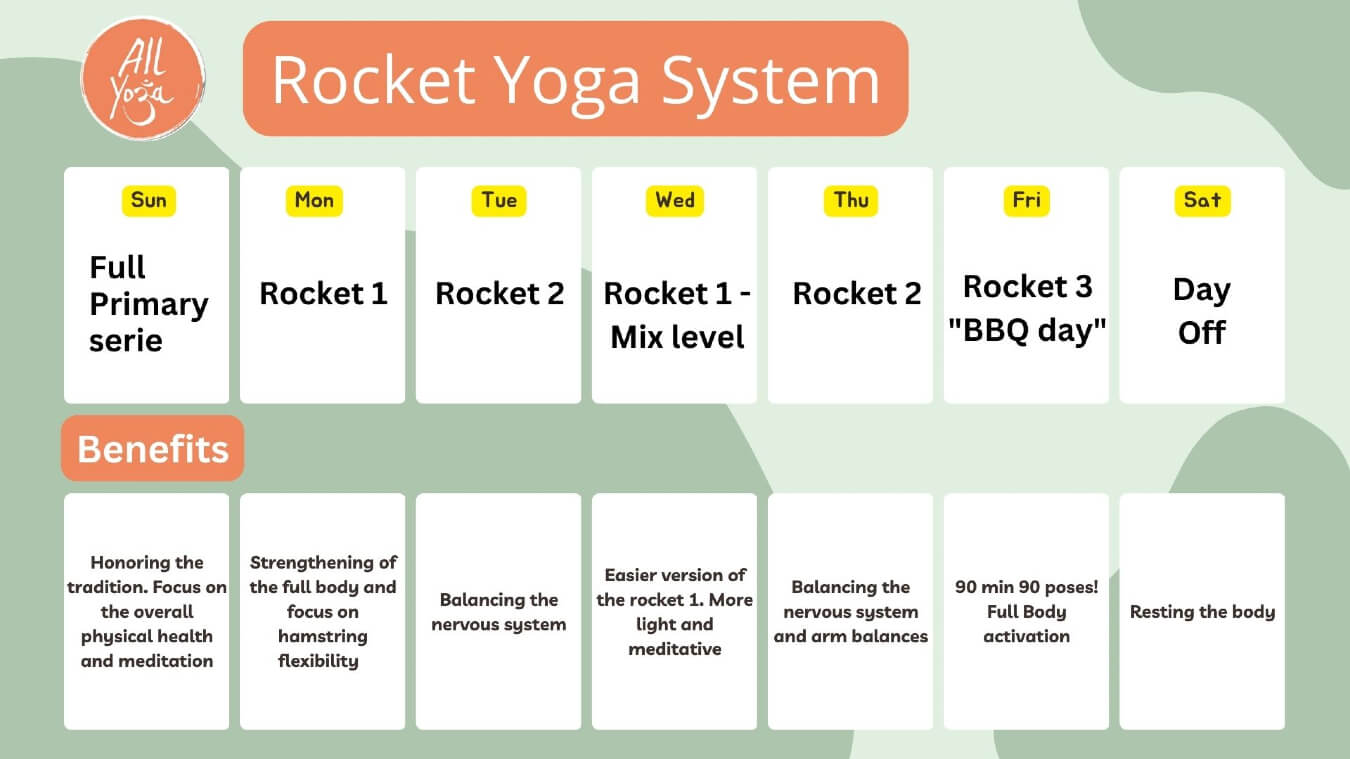
The Rocket Yoga System: Weekly Class Structure
Back in the days, in the bustling city of San Francisco, Larry Schultz revolutionized the yoga scene with his innovative Rocket Yoga classes. Introducing a one-of-a-kind class schedule, he dubbed it the “Rocket Yoga System.” Tailored to each day of the week, these dynamic sequences were designed to provide a truly holistic practice, addressing every aspect of the body while promoting balance in the nervous system and purifying the mind. This unique approach quickly gained traction, captivating countless students and making this style of yoga become very popular!
8 Benefits of Rocket Yoga Practice
- Build upper body strength
- Improve cardiovascular health
- Better mental clarity and focus
- Release body tension
- Improve overall flexibility
- Boost lung capacity
- Reduce stress
- Increase energy and vitality
With Rocket being a fast-paced and dynamic practice, it offers a variety of benefits for the body and mind. It helps to build upper body strength and improve overall flexibility and cardiovascular health. The practice requires focus, which improves mental clarity and concentration. As there are several inversions and arm balances in the sequence, it enhances balance and coordination.
The combination of physical movement and focused breathing can help to reduce stress and tension in the body, promoting relaxation and a sense of well-being. Expect an increase in energy levels and overall vitality.
Rocket Yoga places emphasis on the breath, which boosts your lung capacity and overall respiratory function.
Rocket Yoga is known for its fun, dynamic and challenging sequences and provides an exciting change of pace from traditional yoga styles, keeping the practice fresh and interesting.
6 Tips: Rocket Yoga for Beginners
If you are new to Rocket Yoga, it is best to start with an “all levels” or “beginner-friendly” class and to work with a qualified teacher who can help you to easily modify poses such as lotus yoga pose to suit your level of fitness and ability.
There’s a strong emphasis and focus on the breath. Keep it steady and smooth as you move through the postures.
It can be fast-paced and dynamic, so it’s important to go at your own pace and not push yourself too hard. Listen to your body and only do what feels comfortable for you.
If a posture or movement feels too difficult, don’t be afraid to use modifications or props to make it more accessible. Your teacher will offer modifications and variations to help you progress at your own pace.
Remember that learning Rocket is a process, and it will take time and practice to develop the strength and flexibility needed to perform the more advanced postures. Be patient with yourself and enjoy the journey. With regular practice, you will soon notice an improvement in your flexibility, strength, and balance, as well as a sense of calm and focus in your mind.
Rocket is meant to be playful. Keep the sense of exploration alive every time you step on the mat.
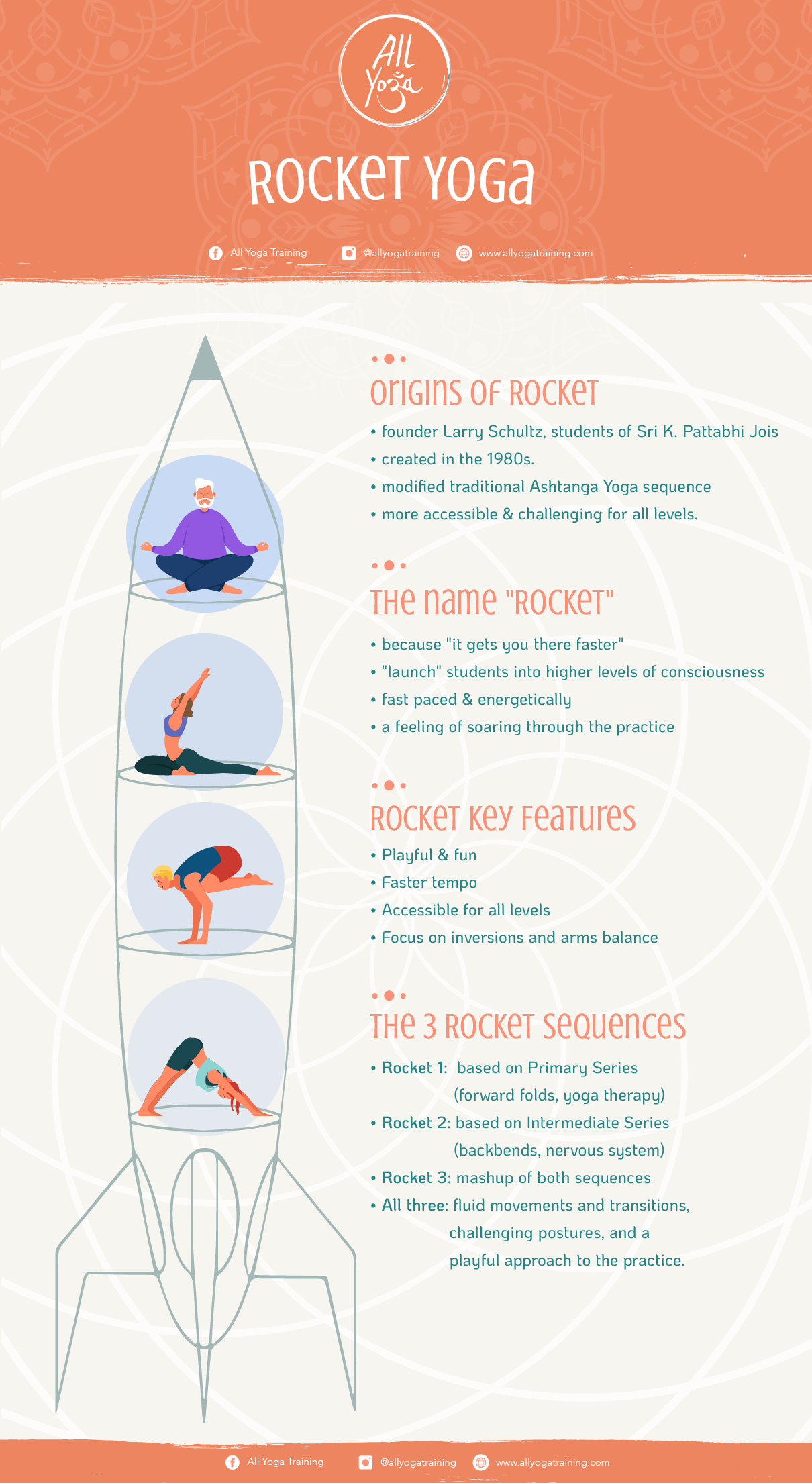
Rocket Yoga at a Glance [Infographic]
Top 5 Rocket Yoga Teachers in 2026
We chose the Rocket Yoga teachers listed below based on our personal experience with them and/or positive feedback from our community.
David Adame
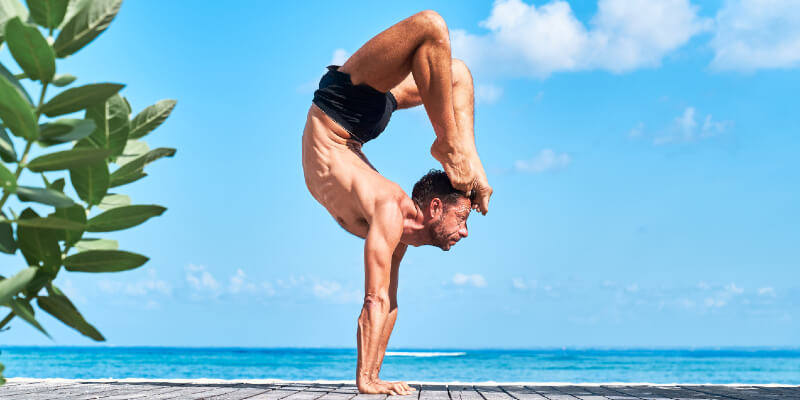
Our very own David Adame, David has a background in contemporary dance and his style of teaching focuses on awareness of movement and connection between body and mind. As many do, David started with Ashtanga Vinyasa in 2014 when he was living in Asia and since then has a profound love and deep sense of connection to the practice. So much so that David is now our lead teacher on the 200-hour Ashtanga yoga course in Bali – we couldn’t have found a more perfect fit if we had tried! David then founded Rocket in 2015 and has never looked back, he completed his online Rocket Yoga training with Carl Calhoun in 2020.
In his teachings, David successfully integrates his own personal experiences with the traditions of yoga, the modern day approach to movement and factual evidential based science research. This helps every individual student in the room reach their own potential and sparks commitment and excitement in his teachings. David’s classes are no doubt challenging (- don’t forget your towel!), however he has the ability to balance this with a light heartedness and focus on exploration and transformation. David effortlessly shares vitality, happiness and passion with his students the same way he cultivates his own relationship with yoga every time he steps on the mat.
David runs the Rocket Yoga module on the 300 hr ytt, which has been widely popular, so much so that the course opens with this module to really engage our students from the get go. David’s strong foundational understanding and personal practise of Ashtanga supports and aids his passion for Rocket – that’s why he makes it look so effortless…
Miles Mortensen

Miles’ teaching is rooted in Ashtanga yoga, Rocket yoga, and Dharma, blending these styles into dynamic and creative flows that honor their traditional origins while integrating influences from other disciplines. His classes encourage students to explore and play while maintaining the core principles that shape these practices.
Over time, Miles has expanded his practice to include gymnastic strength training and hand balancing, which have become key aspects of his personal journey. Hand balancing, in particular, has fostered mindfulness, clarity, and stillness, reflecting the deeper connection between mind and body. Miles’ passion lies in sharing the knowledge gained through his own experiences to inspire and empower others in their practice.
Amber Jean
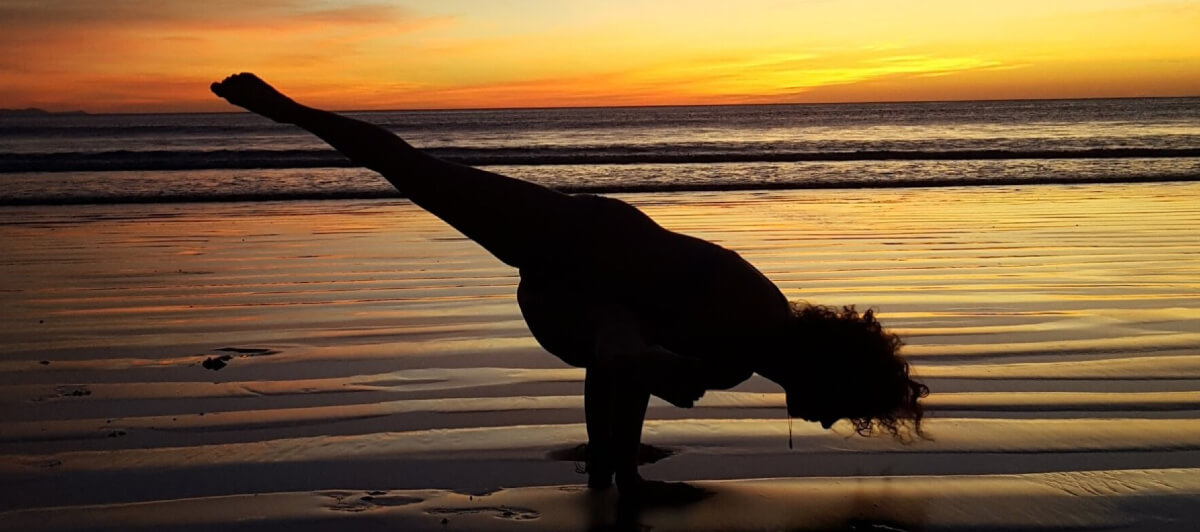
Amber Jean aka. The Rocket Girl…
Amber Jean has facilitated Rocket Yoga teacher trainings since 2000 and owns her own YTT centre called the Rocket Yoga Academy. She is the most senior Rocket Yoga teacher in our list. She trained with Larry Schultz himself in San Francisco and she mentions that he had an amazing quality to bring people together and lightened up the atmosphere. Amber despite being based in Ohio, has taught in many city’s across the world and facilitated yoga teacher trainings also, she ran the 1st and 2nd ever approved training that was not run by Larry himself in 2018 which was fully facilitated by Amber – which is kind of a big deal if we don’t say so ourselves!
Her trainings have been in cities globally such as London, Vancouver, New Mexico, Costa Rica, The Netherlands and Nicaragua. If you decide to learn with Amber, she will help you with Rocket 1 and sequencing and deepening your practise of Rocket 2 and 3, helping guide yogis more safely through Rocket routines. Her traditional dedication to the practise and student teacher connection she had with Larry, shines through in her teaching and approach to Rocket yoga.
David C. Kyle
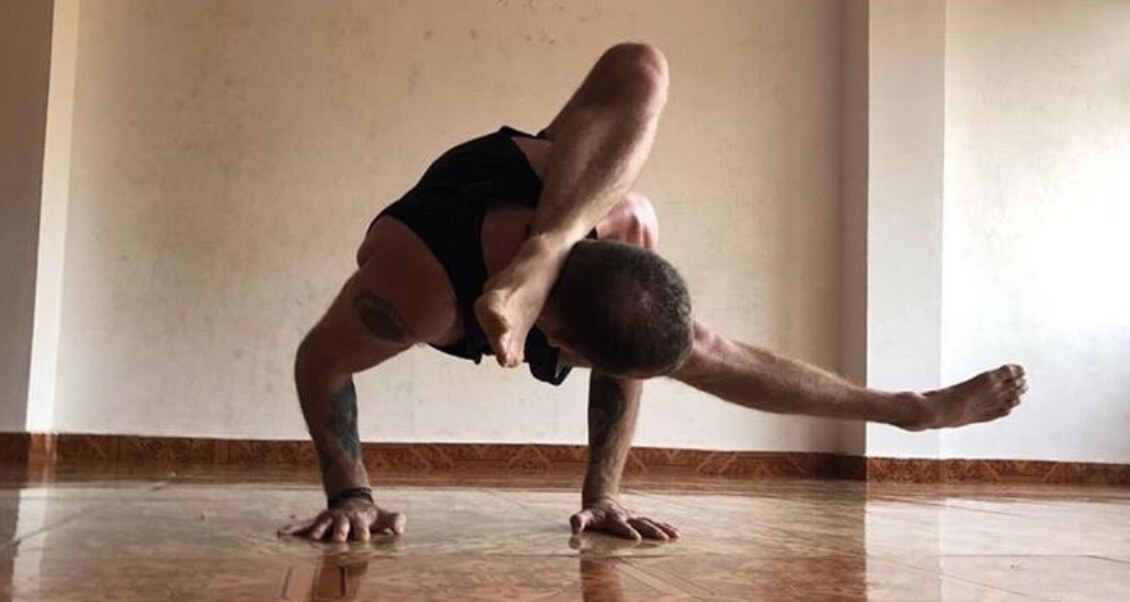
David C. Kyle is one of the most influential teachers in the modern evolution of Rocket Yoga, widely respected for helping shape and spread the practice far beyond its original roots. As a longtime student and close collaborator of Larry Schultz, the founder of Rocket Yoga, David played a key role in refining the system, preserving its spirit, and making it accessible to practitioners around the world. His teaching carries the essence of Rocket’s original intention: a powerful, uplifting practice that blends the discipline of Ashtanga with creativity, freedom, and adaptability.
Through decades of teaching, training, and mentorship, David has become a central figure in the Rocket community, known for his depth of knowledge, precision, and ability to guide students toward both strength and self-discovery. His contribution goes beyond sequences and technique — he has helped Rocket Yoga grow into a global practice and teaching methodology, inspiring countless teachers to carry the tradition forward with integrity, joy, and a sense of possibility.
Rocket Yoga vs Ashtanga Yoga: A Comparison Table
| Aspect | Rocket Yoga | Traditional Ashtanga |
|---|---|---|
| Sequence | Flexible, teacher can modify | Fixed, strict order |
| Pace | Faster, more dynamic | Slower, deliberate |
| Music | Often used, upbeat | Traditionally silent |
| Modifications | Encouraged, accessible | Limited, must ‘earn’ poses |
| Atmosphere | Playful, fun | Serious, disciplined |
Rocket Yoga FAQ: Common Questions Answered
What is Rocket Yoga?
Rocket Yoga is a more accessible version of the Ashtanga Vinyasa system, created by Pattabhi Jois. Both of them consist of Sun Salutations, followed by a standing and seated sequence, and finishes with the traditional closing series. Rocket follows a certain structure, however the given sequence can be altered and modified according to the practitioner’s level. It’s a dynamic and fast-paced flow supported by music, with the intent of making the practice a lot of fun.
What is Rocket Yoga good for?
Rocket strengthens muscles and improves balance. Due to its fast-paced nature and usually more being more intense (yet still accessible for all levels) than Hatha or Vinyasa Yoga it can boost cardiovascular health too. Practicing Rocket yoga enhances concentration and reduces stress.
Where can I practice Rocket Yoga?
Rocket Yoga is becoming more and more popular all around the world. Many yoga studios offer classes as part of their regular schedule and often even workshops. Search for local studios that offer Rocket Yoga classes and enrol in one that fits your schedule and level of experience.
How do I become a Rocket Yoga Teacher?
Firstly, attend Rocket Yoga classes by an experienced rocket yoga teacher to build a strong foundation in the Rocket practice. Familiarise yourself with the principles, postures, and sequences of Rocket Yoga. Then look for a reputable Rocket Yoga teacher training program that is recognised by the Yoga Alliance. All Yoga Training offers a comprehensive Yoga module within their Rocket 300 Hrs Advanced Yoga Teacher Training. You get to practice and learn teaching the three different sequences, learn the “mechanics of flight” complemented by Handstands & Mobility and Anatomy & Physiology.
Is Rocket Yoga good for beginners?
Yes! Despite featuring challenging poses, Rocket Yoga is designed to be accessible for all levels. Teachers offer modifications for every pose, allowing beginners to participate safely while building strength and flexibility progressively.
How is Rocket Yoga different from Ashtanga?
While Rocket Yoga is based on Ashtanga, it differs in key ways. Rocket allows sequence modifications, uses music, has a faster pace, and encourages a playful attitude. Traditional Ashtanga follows a strict sequence in silence.
What are the 3 Rocket Yoga sequences?
Rocket 1 focuses on forward folds (based on Ashtanga Primary Series). Rocket 2 emphasizes backbends and spinal extensions (based on Intermediate Series). Rocket 3 combines elements from both Rocket 1 and 2 for a complete practice.
What are the benefits of Rocket Yoga?
Rocket Yoga builds upper body strength, improves flexibility, boosts cardiovascular health, increases lung capacity, enhances mental clarity and focus, reduces stress, and provides a fun, energizing practice.
More Rocket Yoga Resources
Searching for somewhere to complete a rocket yoga teacher training is more challenging than one would think… With not many Rocket teacher training schools to choose from, we’ve have cut out the work and research for you. We have narrowed it down to the 10 best Rocket yoga teacher training worldwide.
We have designed this 300 Hours Yoga Teacher Training specifically for existing yoga teachers who wish to deepen and expand their understanding of yoga. Throughout the first half of the training (15 training days plus days off), the main focus will be Rocket Yoga, complemented by Handstands & Mobility and Anatomy & Physiology.
Conclusion
Rocket Yoga is a dynamic and invigorating practice that can offer a wide range of benefits for both the body and mind. Its unique blend of traditional Ashtanga yoga and vinyasa flow, emphasis on inversions and flying poses make it stand out from other styles. Whether you’re a beginner or an experienced yogi, this is a practice that can be tailored to suit your level of fitness and ability.
Practicing Rocket style can help you to increase flexibility, strength, and balance in the body, while also helping to improve focus and concentration. It’s also a great way to build self-confidence and self-esteem. And if you’re looking to shake up your yoga practice, try incorporating some inversions and flying poses, you will see how much fun it is and how it can benefit you.
But it’s not just about the physical benefits of the practice, Rocket Yoga can also have a positive impact on your mental and emotional well-being. It can be a great tool for managing stress and anxiety, and it can also help you to find a sense of calm and inner peace.
So, if you’re looking to try something new and exciting, give Rocket a try. You’ll be amazed at how much it can change your body and mind for the better. And don’t forget to have fun and enjoy the journey. Namaste!
The post Rocket Yoga: The Complete Guide with Sequences appeared first on All Yoga Training.