
Did you know that neutral spines can sometimes trick us?
Allow me to explain! 🙂
(By the way, we talk all about “neutral spine” and the biomechanics of the lumbar spine in episode 18 of the Yoga Meets Movement Science podcast with amazing special guest Sam Spinelli! 👏 Listen to the episode here.)
In the yoga, fitness, and rehab worlds, we’re often taught about a concept called “neutral spine.”
It’s thought that understanding how to find and maintain a neutral spine as we move into various positions is important for protecting our back from injury.
What is neutral spine?
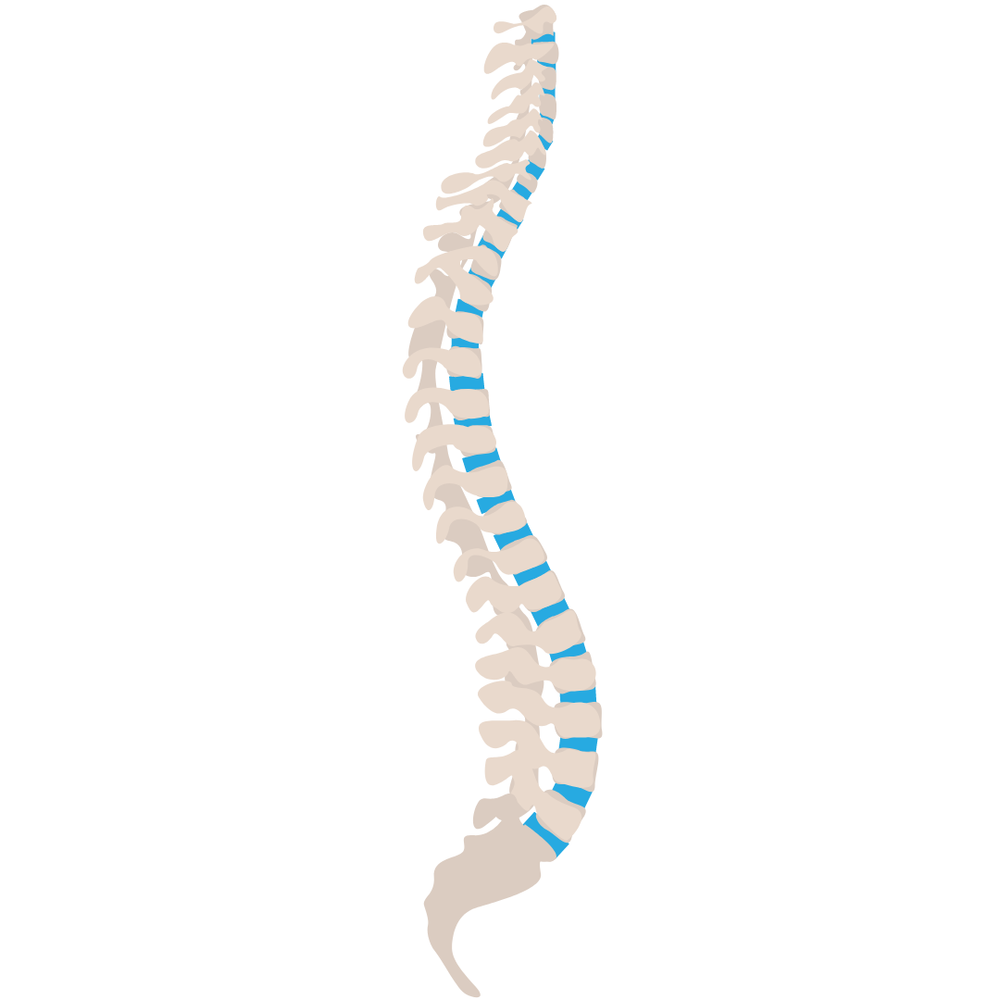
If we picture looking at a person standing upright from the side, a neutral spine is often defined as a single, static position in which the spine maintains its natural curves.
The neutral “zone”
There’s also the concept of a neutral “zone” or range, which is a relatively small range of motion around the neutral position within which little resistance is offered by the spine’s passive structures (ligaments, intervertebral discs, etc.) (Panjabi, 1992).
Neutral or the neutral zone is often claimed to be the safest position for the spine.
When the spine moves out of this zone, certain tissues (e.g., ligaments, intervertebral discs) are believed to be more vulnerable to injury.
Because neutral is believed to be safest, we’re often cued to maintain a neutral spine in many of our yoga poses.

And if we lift weights, we’re commonly coached to keep our spine neutral (i.e., a “flat back”) as we perform exercises like squats, deadlifts, and good mornings (which are similar to yoga’s halfway lift position).
But did you know?? As much as we might try to keep a neutral spine as we squat, deadlift, and fold forward, our lumbar spine actually flexes (rounds), whether we want it to or not in these positions. 😲
It’s true! We might perceive someone’s spine as being in a neutral or “flat back” position in these movements, but at a vertebral level, the lumbar spine naturally rounds (Howe & Lehman, 2021).
Lumbar flexion is unavoidable in these positions!
What does this mean?
Even if we’re instructed to keep a neutral spine, maintaining neutral is not possible in many of our daily movements, yoga asanas, and weightlifting exercises.
Average amount of lumbar flexion per exercise:
-
deadlift: 15-35°
-
squat: 15-25°
-
good morning: 26-29°
Lumbar flexion is a natural and inevitable part of our movement life!
Is it a bad thing that we can’t maintain neutral spine in many movements? Does this put us at greater risk of injury?
Find out more about what the newest research suggests in episode 18 of the Yoga Meets Movement Science podcast. We look forward to seeing you there!