
Bring a little protein-rich taste of Cyprus to your salads, grain bowls, and more!
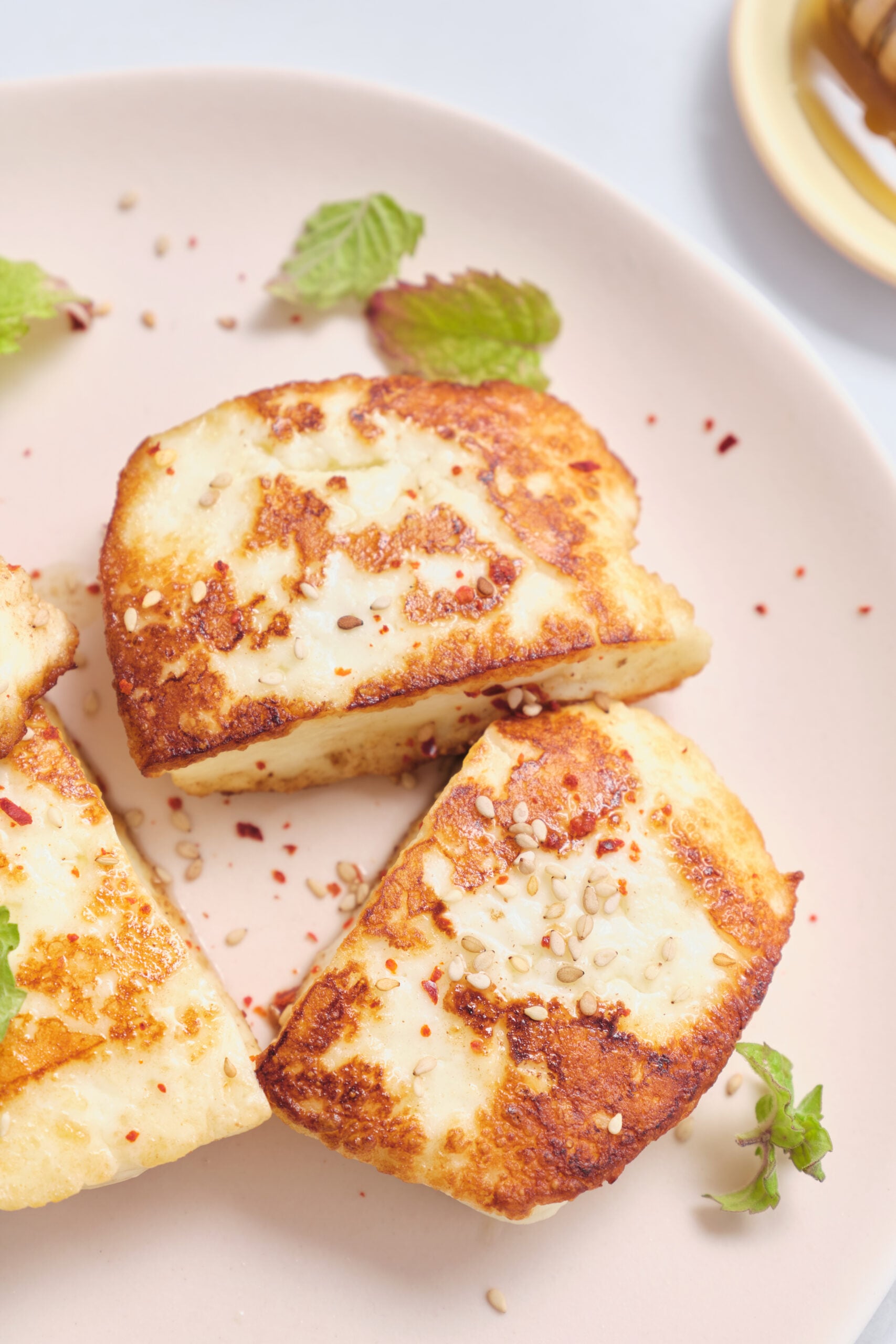
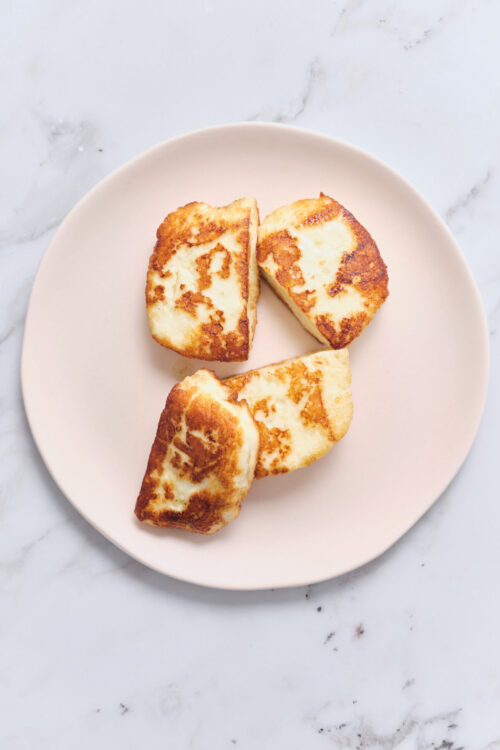
When I first discovered halloumi cheese, I was mind-blown. “How can it be this firm when cooked?” I wondered aloud. Well, the secret to its solid texture rests in how halloumi is made. Basically, this chewy cheese is crafted by pressing curds into tight blocks, then boiling them in the reserved whey, resulting in less moisture and a higher melting point. When pan-fried, each piece becomes golden brown and lightly crisp on the outside with perfectly chewy and savory insides. Although many of us are more accustomed to melty, gooey cheese, I have to say—don’t knock it ’til you try it!
Originally from the island of Cyprus, halloumi has spread far and wide to be fried in our kitchens today, but it’s especially common in Mediterranean cuisine. In those regions, it was traditionally enjoyed as part of a mezze platter alongside breads, dips, and veggies. But feel free to experiment with your fried halloumi until you find your favorite way to serve it. Seasoned with sweet, savory, and even spicy flavors, fried halloumi is an easy snack or protein-rich topper for a salad. No matter how you choose to serve it, this dish is simply delish.

How to avoid rubbery halloumi
Due to halloumi’s high melting point, it stays firm even after being cooked. But it’s never supposed to be rubbery, so it’s important that we avoid overcooking it. We want it chewy and tender, emitting that iconic “squeak” sound with every bite, without hurting our jaws. To avoid rubbery halloumi, make sure to cut the halloumi into half-inch-thick slices. Any thinner than that will risk becoming too hard. Then, don’t cook it for longer than one to two minutes on each side. Serve it warm and fresh off the pan because the cooler it gets, the harder it will become.
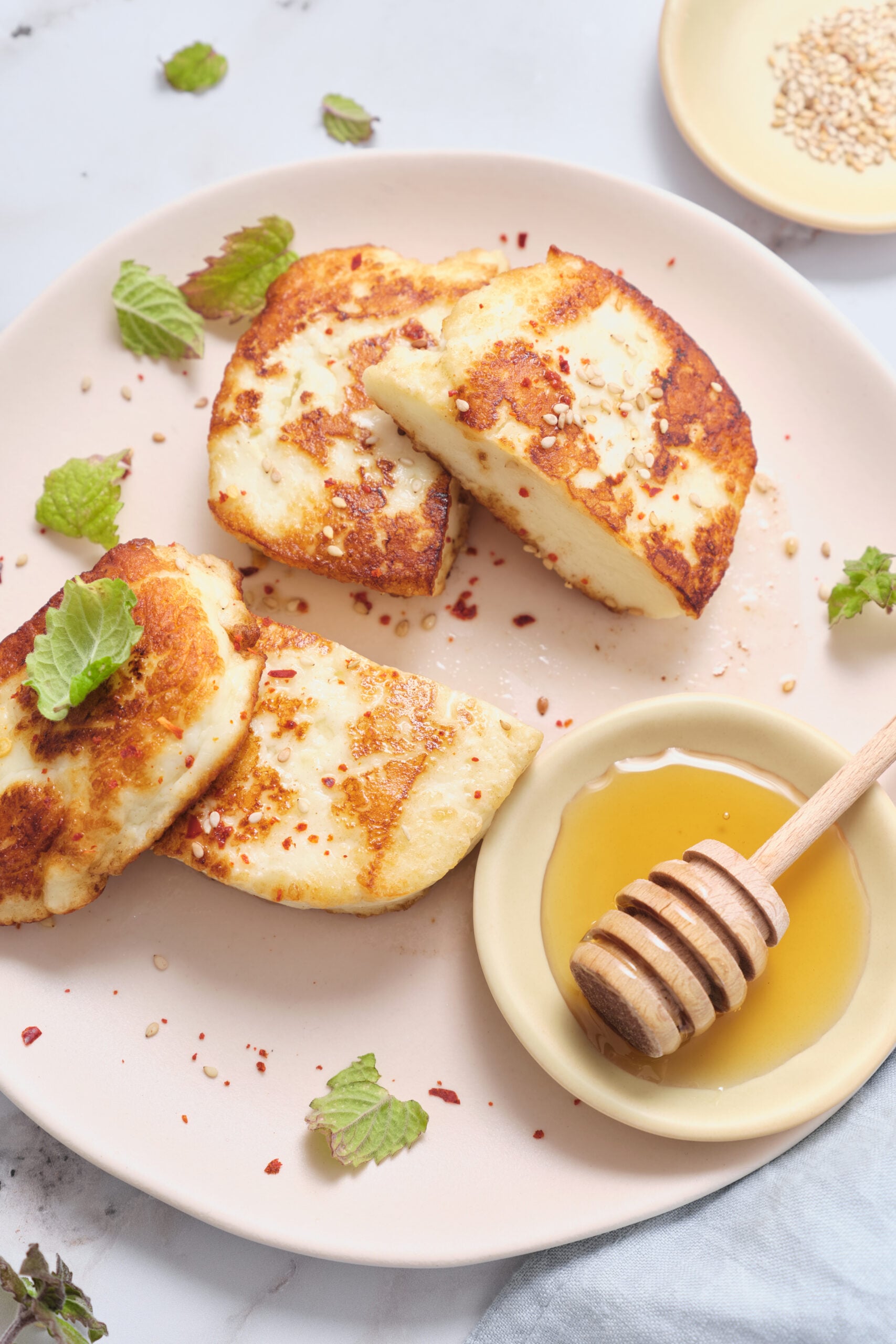
How do I store leftovers?
Truthfully, fried halloumi is best enjoyed fresh because it gets rubbery when cold. But if you do have leftovers, you can store them in an airtight container to refrigerate for up to 2 days. For optimal enjoyment, I recommend chopping it up into pieces so you can mix it into another salad.
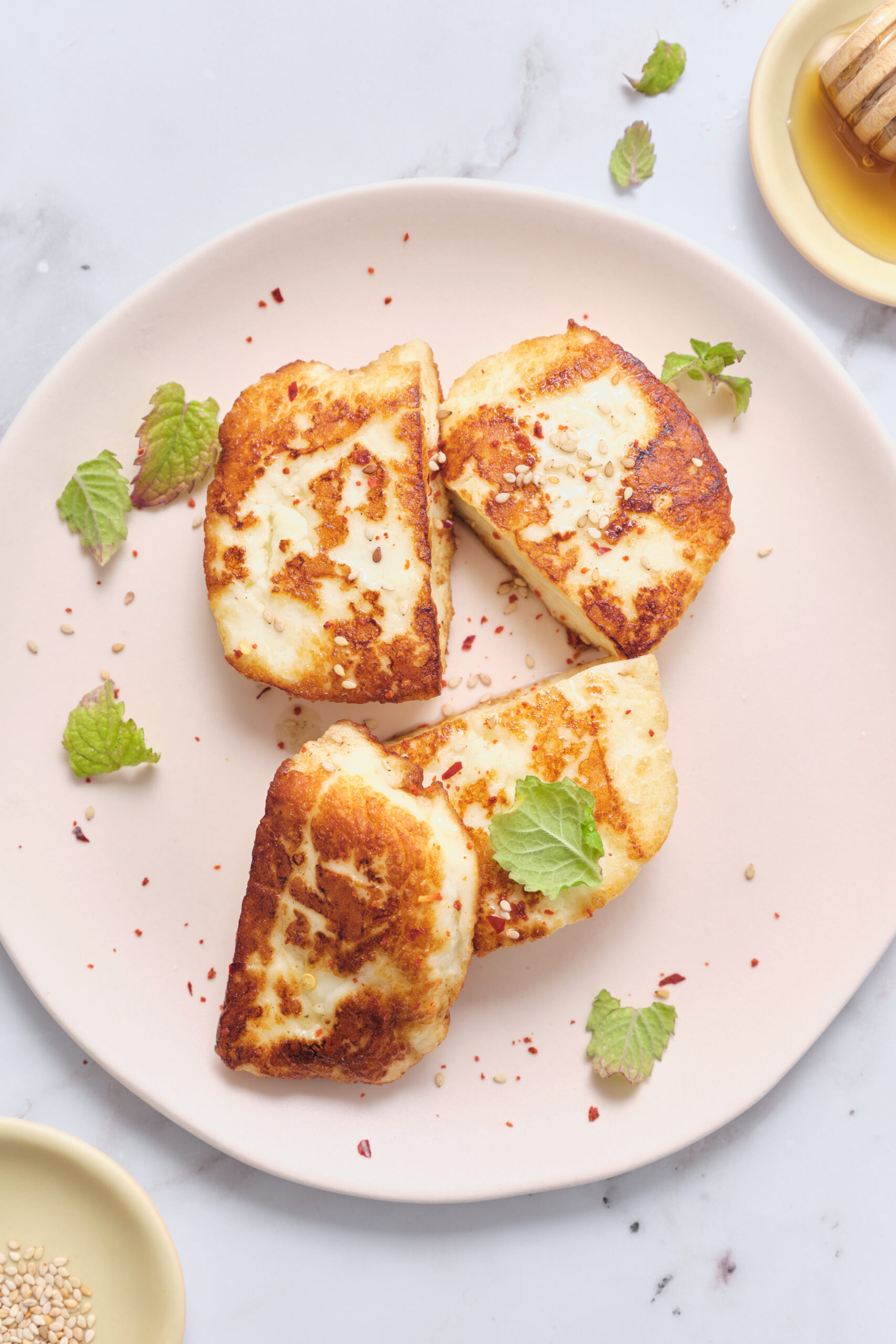
Serving suggestions
If you’d like to embrace Greek tradition, then serve fried halloumi as an appetizer alongside Beet Hummus, Pita Bread, and Greek Yogurt Dip. But if you’re craving more of a meal, then top fried halloumi on Greek Roasted Vegetables and Quinoa Rice. That’s a whole bowl full of terrific flavor and textures! You can also get even more creative by wedging pieces of fried halloumi into a wrap of Paleo Mediterranean Tuna Salad With Olives or on top of a vibrant Farro Salad.
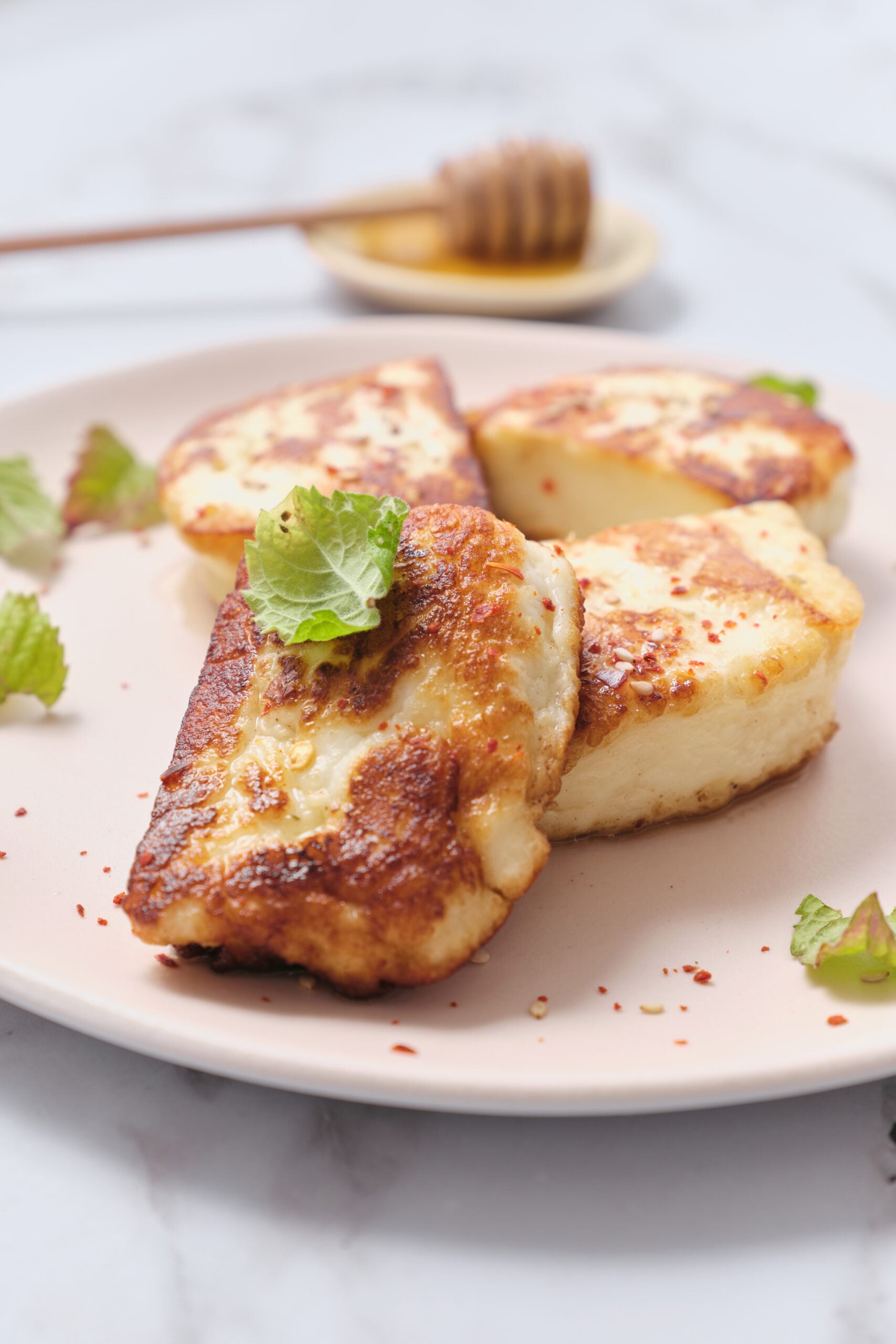
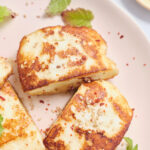
Fried Halloumi
Ingredients
- 8 ounces halloumi cheese
- 2 tablespoons olive oil
- 2 teaspoons honey optional
- A pinch of crushed red pepper flakes optional
- A pinch of sesame seeds optional
- Fresh mint leaves or other fresh herbs, for optional garnish
Instructions
-
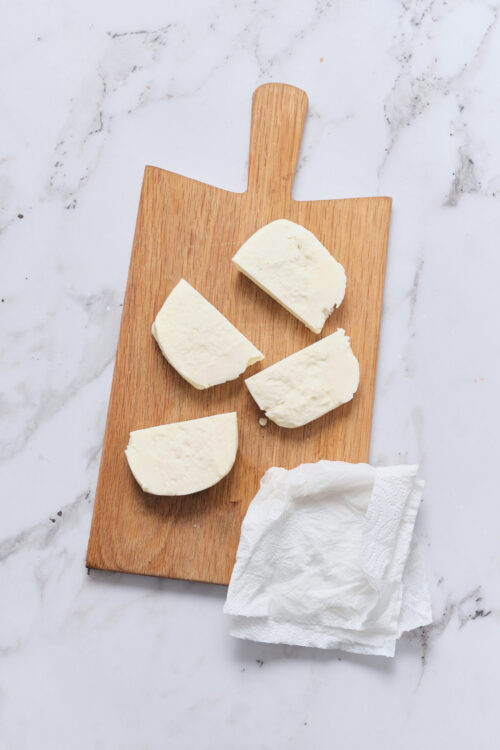
Slice the halloumi cheese into 1/2-inch thick slices and pat them dry with paper towels.

-
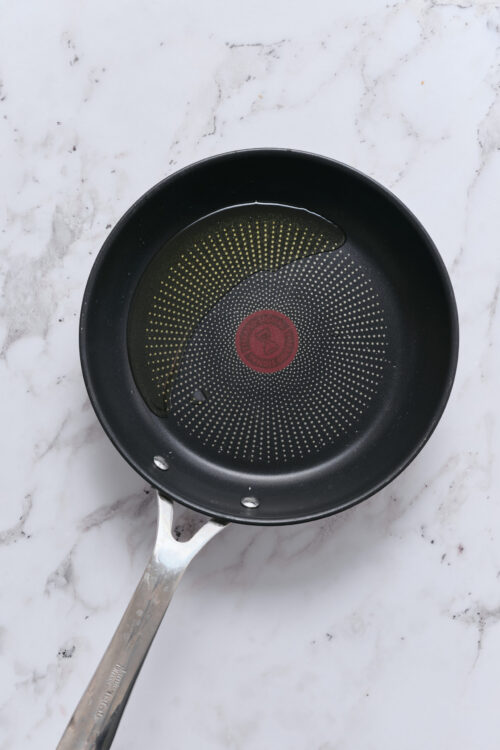
Heat the olive oil in a nonstick pan over medium-high heat until it shimmers.
-
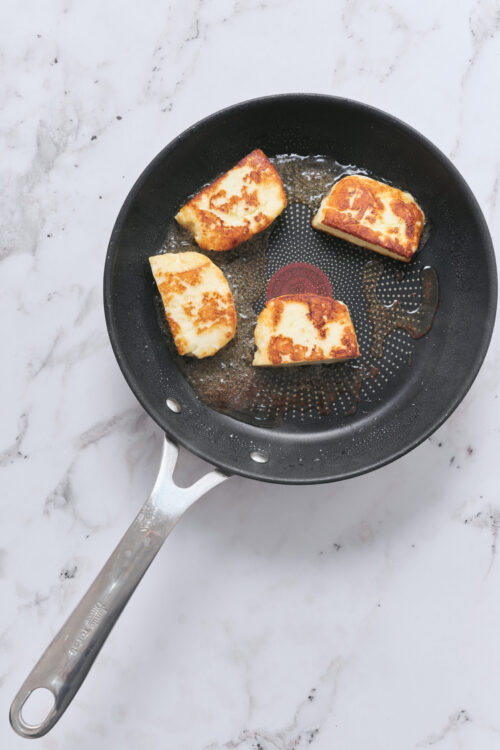
Place the halloumi slices in the pan in a single layer. Fry for 1-2 minutes on each side until a golden crust forms, using a spatula to flip them carefully.
-
Remove the fried halloumi from the pan and transfer to a serving plate.
-
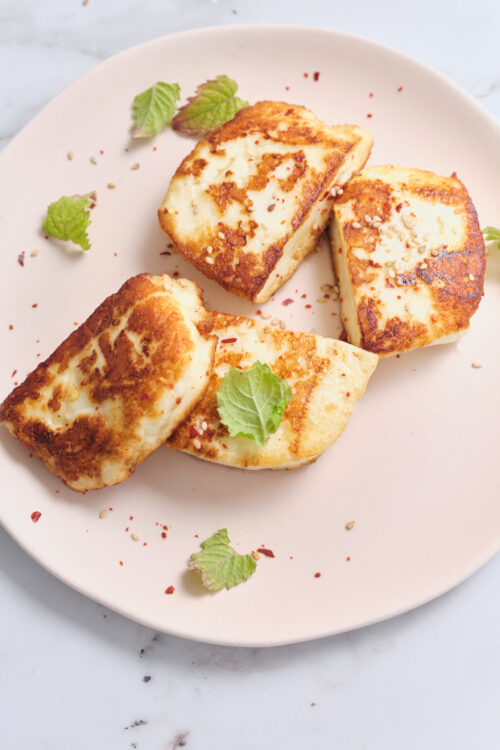
Optionally, drizzle a light amount of warmed honey over the top and sprinkle with crushed red pepper flakes and sesame seeds. Garnish with mint or other fresh herbs.
-
Serve immediately while still warm.
Nutrition
The post Fried Halloumi appeared first on Food Faith Fitness.